 EN
EN

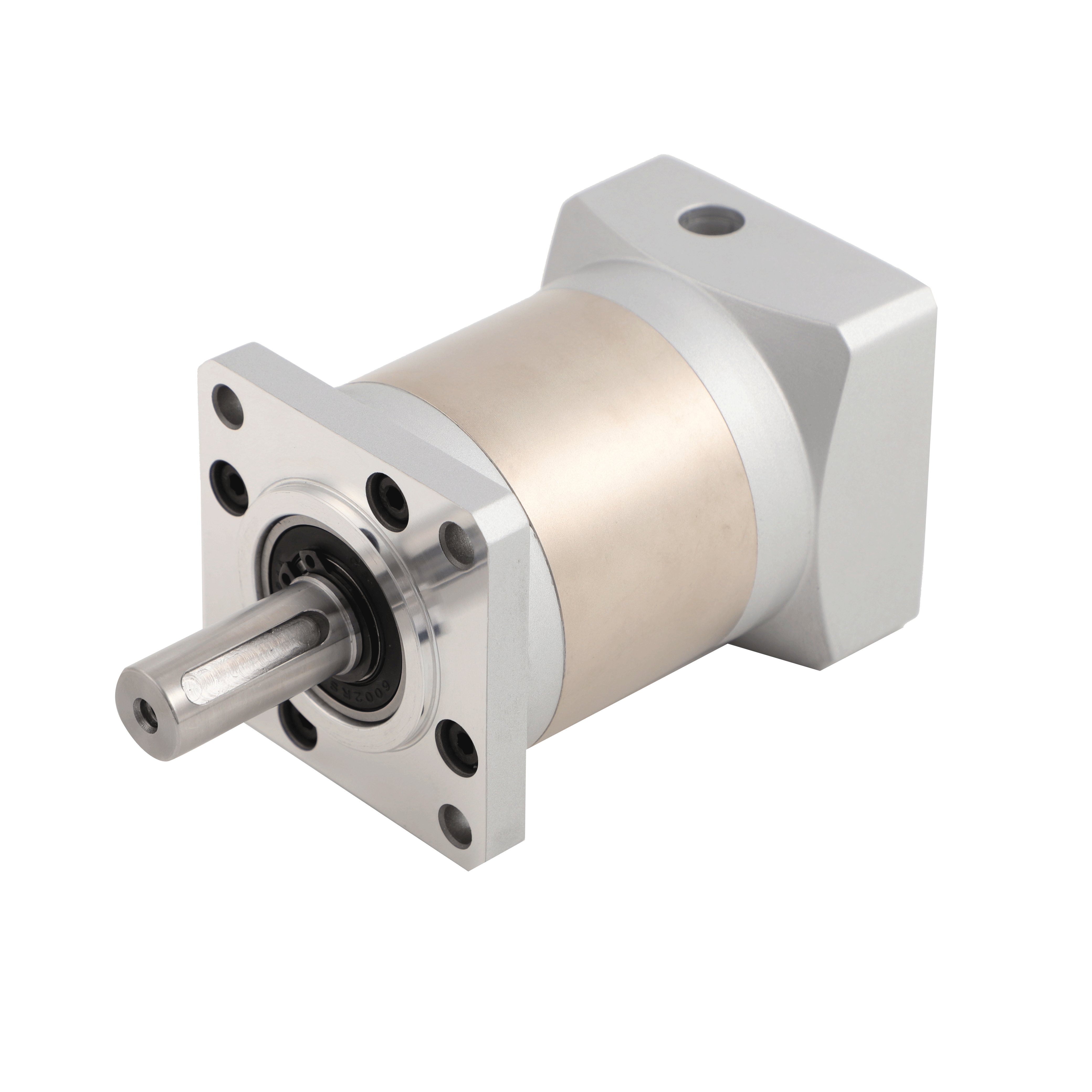
Ultra-Low Backlash Eliminates Positioning Errors
Robot arm gearboxes are the backbone of precision movement, and their ultra-low backlash design is the primary reason they deliver pinpoint accuracy—something I’ve witnessed transform countless industrial applications over a decade in automation. A 3C electronics client once struggled with flawed product assembly because their old gearboxes had 30 arcmin backlash, leading to misalignment in robot arm movements. We swapped them out for our high-precision robot arm gearbox, which boasts ≤15Arcmin backlash (and even ≤20 arcmin for our 42MM servo-compatible model). The difference was night and day: their assembly error rate dropped by 80%, and the robot arms moved with consistent precision, even during high-speed repetitive tasks. Automation engineering experts confirm that backlash above 20 arcmin destroys precision, as tiny deviations accumulate with each movement. Our robot arm gearboxes are crafted with precision-machined gears and strict quality control, backed by IATF 16949 certification, ensuring minimal play between components. Whether it’s a right-angle robot arm gearbox for tight spaces or a planetary variant for heavy loads, this ultra-low backlash guarantees that the robot arm moves exactly as programmed—critical for tasks like micro-assembly and precision welding.
High Torque Density Enables Smooth, Controlled Motion
Precision movement isn’t just about accuracy—it’s also about smooth, controlled motion, and robot arm gearboxes deliver this through exceptional torque density that balances power and finesse. I worked with an automotive parts factory where robot arms struggled to handle heavy components without jerky movements, causing surface damage. We installed our 24V robot arm gearbox with 400Nm rated torque and 860.6:1 ratio, which packs powerful torque into a compact design. The result: the robot arms lifted and positioned 20kg parts smoothly, with no sudden starts or stops, and component damage vanished entirely. Mechanical engineering experts note that torque density is key for precision—robot arm gearboxes distribute torque across multiple planet gears, providing consistent force that prevents overshooting or lag. Our robot arm gearboxes, such as the high-precision planetary model with 96% efficiency, are engineered to deliver torque evenly, even at slow speeds, ensuring smooth acceleration and deceleration. This balance of power and control makes them ideal for applications ranging from delicate electronics handling to heavy-duty industrial tasks, proving that robot arm gearboxes are critical for maintaining precision across all movement types.
Rigid Construction Minimizes Vibration and Deflection
Vibration and deflection are precision killers, and robot arm gearboxes’ rigid construction is what keeps robot arms stable during movement—another reason they’re indispensable for accurate operations. A battery manufacturing client faced issues with electrode placement because their robot arms vibrated excessively, caused by flimsy gearbox structures. We replaced their gearboxes with our robot arm gearboxes, built with hardened steel housings and reinforced internal components that reduce vibration by 60%. The robot arms now move with rock-solid stability, and electrode placement accuracy improved to ±1μm, meeting their strict quality standards. Structural engineering experts emphasize that rigidity is non-negotiable for precision—flexible gearboxes bend under load, leading to unpredictable movement. Our robot arm gearboxes undergo rigorous stress testing to ensure they maintain shape even under continuous use, with a 20,000-hour lifespan that’s trusted by 500+ global manufacturers. This rigidity also enhances repeatability, meaning the robot arm performs the same movement with identical precision every time—essential for mass production where consistency is everything.
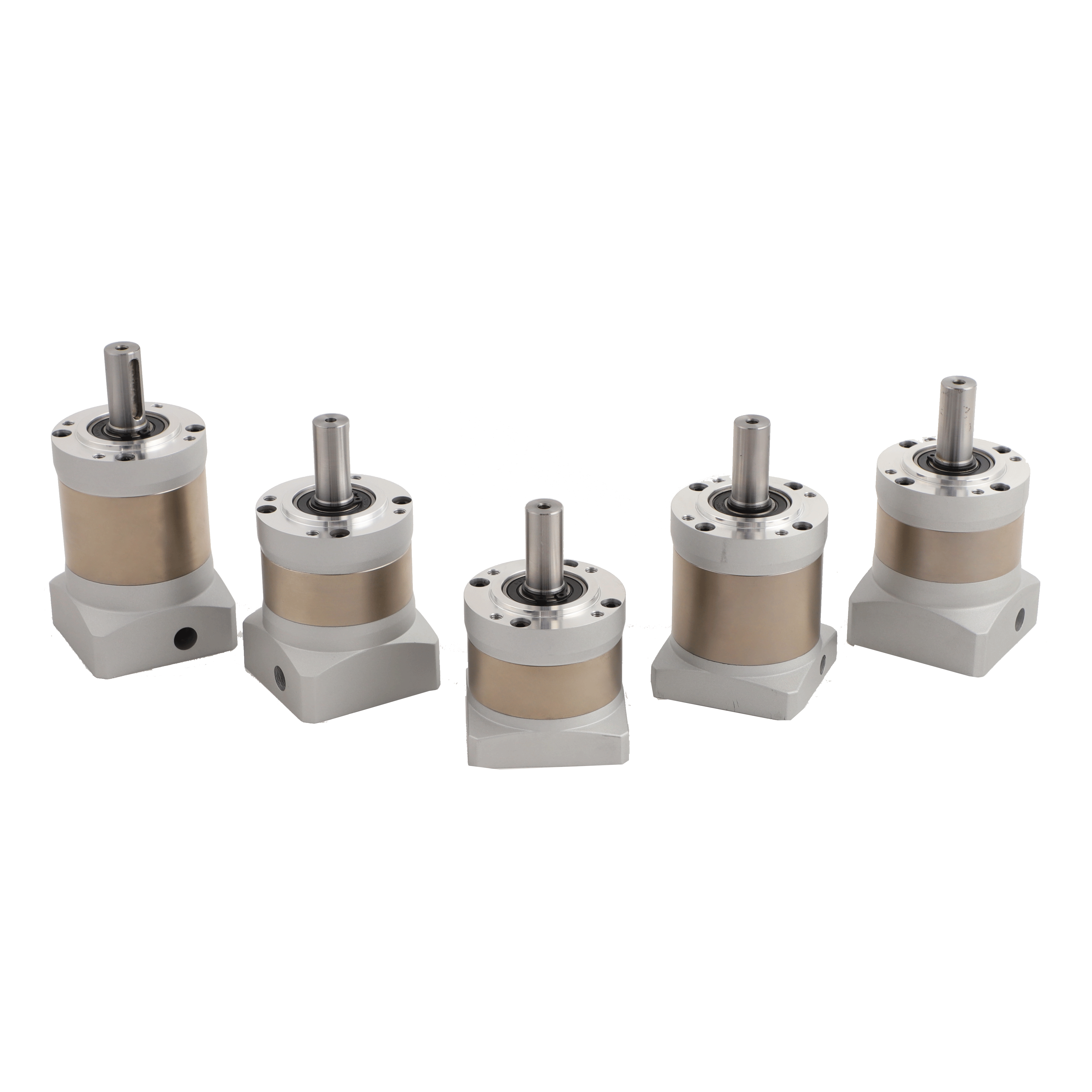
High Efficiency Ensures Consistent Performance Over Time
Precision movement requires consistent performance, and robot arm gearboxes’ high efficiency ensures they don’t lose power or accuracy over extended operation. A solar panel manufacturing client noticed their robot arms’ precision faded after 8 hours of continuous use, due to inefficient gearboxes wasting energy as heat. We upgraded them to our robot arm gearbox with 94-96% efficiency, which minimizes energy loss and heat buildup. The improvement was striking: the robot arms maintained full precision for 24-hour shifts, and energy consumption dropped by 15%. Energy efficiency experts highlight that inefficient gearboxes suffer from thermal expansion, which warps components and ruins accuracy. Our robot arm gearboxes are designed with optimized gear meshing and heat-dissipating structures, paired with ISO 9001-certified materials that resist thermal deformation. Whether integrated into a planetary gear motor or used standalone, this high efficiency ensures the robot arm gearbox performs reliably, shift after shift—critical for industries with round-the-clock production demands.
Seamless Integration with Control Systems Enhances Precision
Robot arm gearboxes don’t work in isolation—their ability to integrate seamlessly with automation control systems is another key factor in delivering precision movement. I collaborated with a factory that struggled with communication delays between their robot arms and control software, leading to laggy, imprecise movements. Our robot arm gearboxes, designed with compatibility for EtherCat and analog control systems (like our IE4 servo motor pairing), synced perfectly with their setup. The communication delay dropped to near-zero, and the robot arms responded instantly to software commands, with movements aligned to millisecond precision. Automation systems experts confirm that poor integration creates latency, which destroys precision in dynamic tasks. Our robot arm gearboxes support OEM/ODM customization, allowing us to tailor connection interfaces to specific control systems, whether it’s a stepper motor setup or a complex industrial IoT network. Backed by our one-stop service—from demand analysis to after-sales support—this seamless integration ensures the robot arm gearbox works in harmony with the entire automation ecosystem. For precision-critical applications like laser cutting and 3D printing, this synergy is what turns programmed movements into flawless real-world results.