Introduction to BLDC Products and Application Scenario Analysis
I. Introduction to BLDC
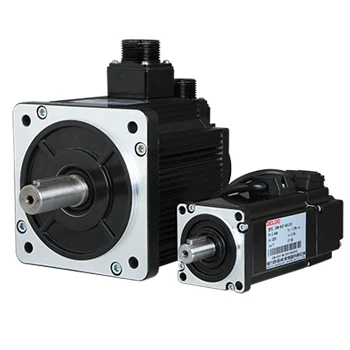
A Brushless DC Motor (BLDC) is a type of DC motor that does not use mechanical commutating contacts (carbon brushes). Instead, it employs an electronic controller to achieve commutation, replacing the traditional DC motor with brushes.
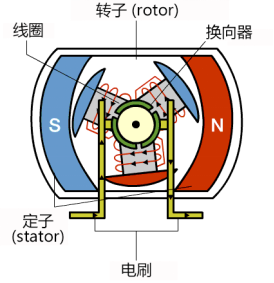
The counterpart to this is the basic "DC motor (brushed motor)." A coil is placed within a magnetic field. When current flows, the coil is repelled by one magnetic pole and attracted by the other, causing continuous rotation under this effect. During rotation, the direction of current flowing through the coil is reversed, allowing it to keep spinning.
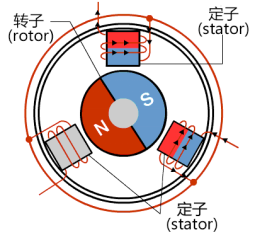
In a DC motor (brushed motor), the magnetic field generated by the fixed permanent magnets is stationary. Rotation is achieved by controlling the magnetic field produced by the coil (rotor) inside it. The rotational speed is changed by varying the voltage. In a BLDC motor, the rotor consists of permanent magnets. Rotation is achieved by changing the direction of the magnetic field generated by the surrounding coils. The rotation of the rotor is controlled by regulating the direction and magnitude of the current flowing through the coils.
Brushless DC motors have three configurations: single-phase, two-phase, and three-phase. Among these, the three-phase BLDC is the most common. Generally, single-phase and three-phase brushless motors are frequently used in everyday electrical appliances. The underlying principle of these two configurations is the same, but their control methods differ slightly.
In a single-phase brushless motor, all internal windings are completed using a single wire. The current direction differs between windings. By changing the current direction at appropriate positions and times, motor rotation control can be achieved. The control method for this configuration is relatively simple, making it widely used in applications such as radiator fans.
Unlike the single-phase structure, the internal windings of a three-phase brushless motor are divided into three groups. Superficially, these appear as three independent sets of windings, but internally they are interconnected. Compared to the single-phase structure, this motor configuration offers advantages in speed control and overall noise reduction, resulting in a broader range of applications.
II. Characteristics of Brushless Motors
1. Can replace DC motor speed regulation, inverter + variable frequency motor speed regulation, and asynchronous motor + reducer speed regulation;
2. Retains the advantages of traditional DC motors while eliminating the carbon brush and slip ring structure;
3. Capable of low-speed, high-power operation, can drive large loads directly without a reducer;
4. Small size, lightweight, high output power;
5. Excellent torque characteristics, good mid/low-speed torque performance, high starting torque, low starting current;
6. Stepless speed regulation, wide speed range, strong overload capacity;
7. Soft start/stop, good braking characteristics, can eliminate the need for original mechanical or electromagnetic braking devices;
8. High efficiency: The motor itself has no excitation loss or carbon brush loss, eliminates multi-stage deceleration consumption, achieving comprehensive energy savings of 20%~60%;
9. High reliability, good stability, strong adaptability, simple maintenance and repair;
10. Resistant to vibration and shock, low noise, low vibration, smooth operation, long lifespan;
11. No spark generation, especially suitable for explosive environments; explosion-proof models available;
12. Trapezoidal wave field motors and sinusoidal wave field motors can be selected based on requirements.
III. Application Scenarios for Brushless Motors
Constant Load Applications
This type of application is primarily used in fields requiring a certain rotational speed but with low precision requirements for that speed, such as fans, water pumps, and hair dryers. Such applications typically have relatively low costs and often use open-loop control.
Variable Load Applications
These mainly refer to applications where the motor speed needs to vary within a certain range. These applications have higher requirements for the motor's high-speed characteristics and dynamic response. Household appliances like washing machines, spin dryers, and compressors are good examples. In the automotive industry, oil pump control, electronic controllers, engine control, and electronic tools are also excellent examples. There are also many applications in the aerospace field, such as centrifuges, pumps, robotic arms, and gyroscopes. In this field, motor feedback devices are often used to implement semi-open-loop and closed-loop control. This necessitates complex control algorithms, increasing controller complexity and system cost.
Positioning Applications
Most industrial control and automation applications fall into this category. These applications often involve energy transmission, such as gears or conveyor belts. Consequently, the system has specific requirements regarding the motor's speed dynamic response and torque. Additionally, these applications may require frequent changes in motor direction. The motor may operate in acceleration, constant speed, or deceleration phases, and the load may also vary during these phases. This places higher demands on the controller.
 Hot News
2026-09-24
2026-09-16
2026-09-16
2026-09-14
2026-09-11
2026-06-18

Copyright © 2025 by Delixi New Energy Technology (hangzhou) Co., Ltd. - Privacy policy
 EN
EN